4 KiB
Contribute
To build evcc from source, [Go][1] 1.22 and [Node][2] 18 are required.
Build and run go backend. The UI becomes available at http://127.0.0.1:7070/
make install-ui
make ui
make install
make
./evcc
Debugging in VS Code
evcc Core
To debug a local evcc build in VS Code, add the following entry to your launch.json.
You can adjust the referred configuration as needed to e.g. use your live configuration.
        {
            "name": "Launch evcc local build with demo config",
            "type": "go",
            "request": "launch",
            "mode": "auto",
            "program": "${workspaceFolder}",
            "args": ["-c", "${workspaceFolder}/cmd/demo.yaml"],
            "cwd": "${workspaceFolder}",
        },
Decorator
Here's another launch.json configuration that can be used for specifically debugging the decorator.
{
    "name": "Debug decorator",
    "type": "go",
    "request": "launch",
    "mode": "debug",
    "program": "${workspaceFolder}/cmd/tools/decorate.go",
    "args": ["-o", "decorator_test.go", "-p", "main", "-f", "decorateVehicle", "-b", "api.Vehicle", "-t", "api.VehicleChargeController,StartCharge,func() error", "-t", "api.VehicleChargeController,StopCharge,func() error"],
},
Cross Compile
To compile a version for an ARM device like a Raspberry Pi set GO command variables as needed, eg:
GOOS=linux GOARCH=arm GOARM=6 make
UI development
For frontend development start the Vue toolchain in dev-mode. Open http://127.0.0.1:7071/ to get to the livelreloading development server. It pulls its data from port 7070 (see above).
npm install
npm run dev
Integration tests
We use Playwright for end-to-end integration tests. They start a local evcc instance with different configuration yamls and prefilled databases. To run them, you have to do a local build first.
make ui build
npm run playwright
Simulating device state
Since we don't want to run tests against real devices or cloud services, we've build a simple simulator that lets you emulated meters, vehicles and loadpoints. The simulators web interface runs on http://localhost:7072.
npm run simulator
Run an evcc instance that uses simulator data. This configuration runs with a very high refresh interval to speed up testing.
make ui build
./evcc --config tests/simulator.evcc.yaml
Code formatting
We use linters (golangci-lint, Prettier) to keep a coherent source code formatting. It's recommended to use the format-on-save feature of your editor. For VSCode use the Go, Prettier and Vetur extension. You can manually reformat your code by running:
make lint
make lint-ui
Publishing docker images
make docker DOCKER_IMAGE=my/docker DOCKER_TAG=0815
Changing templates
evcc supports a massive amount of different devices. To keep our documentation and website in sync with the latest software the core project (this repo) generates meta-data that's pushed to the docs and evcc.io repository. Make sure to update this meta-data every time you make changes to a templates.
make docs
If you miss one of the above steps Gitub Actions will likely trigger a Porcelain error.
Adding or modifying translations
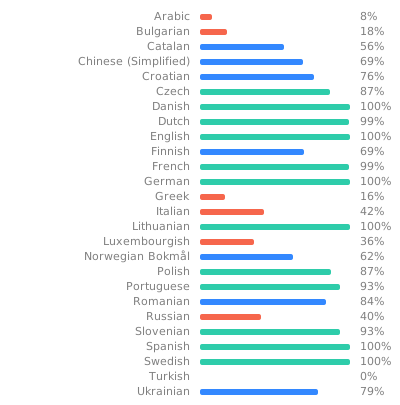
evcc already includes many translations for the UI. Weblate Hosted is used to maintain all languages. Feel free to add more languages or verify and edit existing translations. Weblate will automatically push all modifications on a regular base to the evcc repository.